
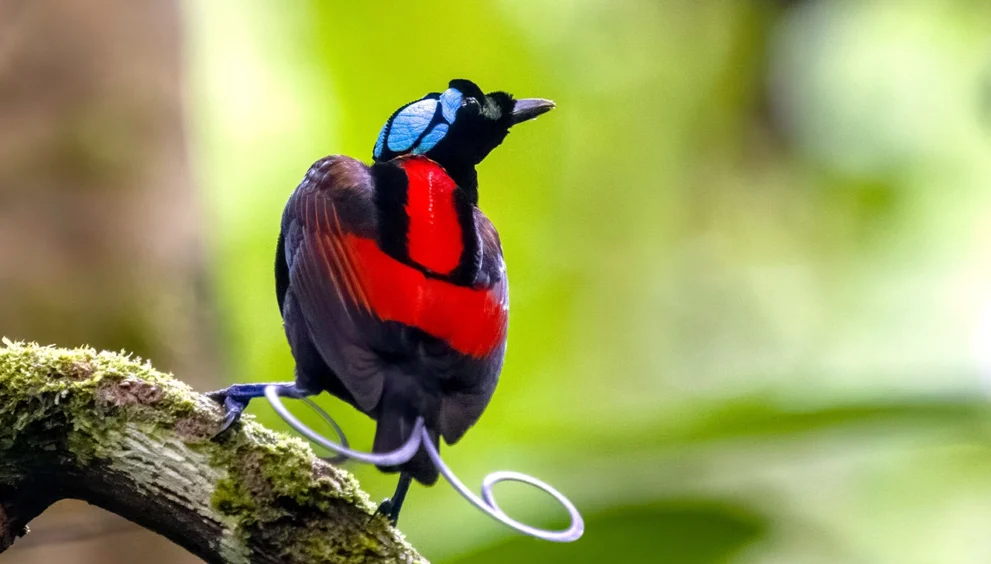
Among all the beautiful creatures on Earth, few capture human imagination like the Bird of Paradise. Found mainly in the rainforests of Papua New Guinea and parts of eastern Indonesia, this bird is often described as nature’s masterpiece. Its extraordinary colours, dramatic feathers, and complex courtship dances make it one of the most visually stunning birds ever discovered. The Bird of Paradise is not just beautiful to look at; it represents the creativity and patience of evolution itself.
For centuries, explorers, scientists, and local communities have admired this bird for its elegance and mystery. Unlike many animals whose beauty serves camouflage or survival, the Bird of Paradise’s appearance is designed to be seen. This article explores the bird’s habitat, behaviour, and significance, offering a guided look into one of nature’s most remarkable creations.
Where the Bird of Paradise Lives
The Bird of Paradise inhabits dense tropical rainforests, primarily in Papua New Guinea, with some species found in nearby islands and northeastern Australia. These forests provide the perfect environment for the birds’ lifestyle, offering tall trees, thick vegetation, and abundant food sources.
The isolation of these rainforests allowed the Bird of Paradise to evolve without heavy competition from other bird species. This isolation played a key role in the development of its unusual shapes, colours, and behaviours.
Rainforest Canopy Life
Most Birds of Paradise spend much of their time high in the forest canopy. From these elevated positions, they feed, rest, and perform elaborate courtship displays. The height provides safety from predators and a clear stage for attracting mates.
Climate and Environment
Warm temperatures, high humidity, and consistent rainfall support the bird’s food supply and feather health. These stable conditions allow the Bird of Paradise to maintain its vibrant appearance year-round.
Why the Bird of Paradise Looks So Extraordinary
The Bird of Paradise is famous for its dramatic feathers, bold colours, and unusual body shapes.
Specialized Feathers
Many species possess long tail feathers, cape-like plumes, or fan-shaped ornaments that can be raised, spread, or transformed during displays. These feathers reflect light in unique ways, creating shimmering blues, greens, yellows, and reds.
Color Beyond Pigment
Some colours seen in Birds of Paradise are not produced by pigments but by microscopic feather structures that bend and reflect light. This structural colouration creates colours that appear deeper and more intense than ordinary pigmentation.
The Art of Courtship
One of the most fascinating aspects of the Bird of Paradise is its courtship behaviour.
Elaborate Mating Dances
Male Birds of Paradise perform highly choreographed dances that include hopping, bowing, wing spreading, and rapid movements. Each species has its own unique routine, refined through generations.
Visual Illusions
Some species manipulate their feathers to create shapes that appear larger, darker, or more symmetrical than their actual bodies. These visual tricks are designed to impress females by displaying strength, health, and genetic quality.
Selective Mating
Female Birds of Paradise are extremely selective. Only males with the most precise movements, brightest colours, and healthiest feathers are chosen, driving the continued evolution of extravagant traits.
Diet and Daily Life
Despite their dramatic appearance, Birds of Paradise lead relatively quiet daily lives outside mating season.
Feeding Habits
Their diet consists mainly of fruits, berries, insects, and small arthropods. This balanced diet supports both energy needs and feather development.
Solitary Behavior
Most species are solitary or loosely social. Males and females typically interact only during mating, after which females raise the chicks alone.
The Role of the Bird of Paradise in Nature
Beyond beauty, the Bird of Paradise plays an important role in its ecosystem.
Seed Dispersal
By feeding on fruit, these birds help disperse seeds throughout the rainforest. This process supports forest regeneration and plant diversity.
Indicator of Forest Health
Because they rely on intact forests, Bird of Paradise populations often reflect the overall health of their environment. Declines in their numbers can signal habitat loss or ecological imbalance.
Cultural Importance
The Bird of Paradise holds deep cultural significance for indigenous communities.
Symbol of Beauty and Spirit
In many local traditions, the bird symbolises beauty, freedom, and spiritual connection. Its feathers have been used in ceremonial dress and cultural expression for generations.
Inspiration for Art and Science
European explorers once believed the Bird of Paradise never touched the ground, leading to myths that inspired art, literature, and early scientific curiosity.
Threats to the Bird of Paradise
Despite its resilience, the Bird of Paradise faces increasing challenges.
Habitat Loss
Deforestation driven by logging, agriculture, and development reduces the rainforest areas these birds depend on. Loss of tall trees disrupts nesting and courtship behaviour.
Climate Change
Changes in rainfall patterns and temperature affect food availability and forest structure, indirectly impacting Bird of Paradise populations.
Illegal Wildlife Trade
Although less common today, historical hunting for feathers and illegal trade still pose risks in certain areas.
Conservation Efforts
Protecting the Bird of Paradise requires preserving its natural environment.
Protected Areas
National parks and conservation zones help safeguard critical rainforest habitats where these birds thrive.
Community-Based Conservation
Local communities play a vital role in conservation by protecting forests and promoting sustainable land use practices.
Education and Awareness
Raising global awareness about the Bird of Paradise encourages responsible tourism and international support for conservation initiatives.
Observing the Bird of Paradise Responsibly
Seeing a Bird of Paradise in the wild is a rare and unforgettable experience.
Guided Wildlife Tours
Professional guides understand bird behaviour and ensure minimal disturbance. Observing from a distance protects both the birds and their habitat.
Patience and Respect
Courtship displays may take hours or days to observe. Quiet patience increases the chance of witnessing these extraordinary performances.
Why the Bird of Paradise Represents Nature’s Creativity
The Bird of Paradise is proof that nature is not only functional but also artistic. Its appearance serves no purpose other than attraction and expression, challenging the idea that evolution always favours simplicity.
This bird demonstrates how beauty itself can drive survival and diversity, creating forms that inspire awe rather than efficiency.
Conclusion: A Living Symbol of Natural Wonder
The Bird of Paradise stands as one of nature’s most beautiful creations, shaped by time, isolation, and selective choice. Its feathers, dances, and behaviour reflect the extraordinary potential of life on Earth.
Protecting this bird means protecting the rainforest systems that support countless other species. By appreciating the Bird of Paradise not just as a visual marvel but as a vital part of its ecosystem, we deepen our respect for nature’s delicate balance and creative power.
References
https://www.britannica.com/animal/bird-of-paradise-family
https://www.nationalgeographic.com/animals/birds/facts/birds-of-paradise
https://www.audubon.org/bird-guide
https://www.iucnredlist.org
https://www.worldwildlife.org/species/birds-of-paradise