
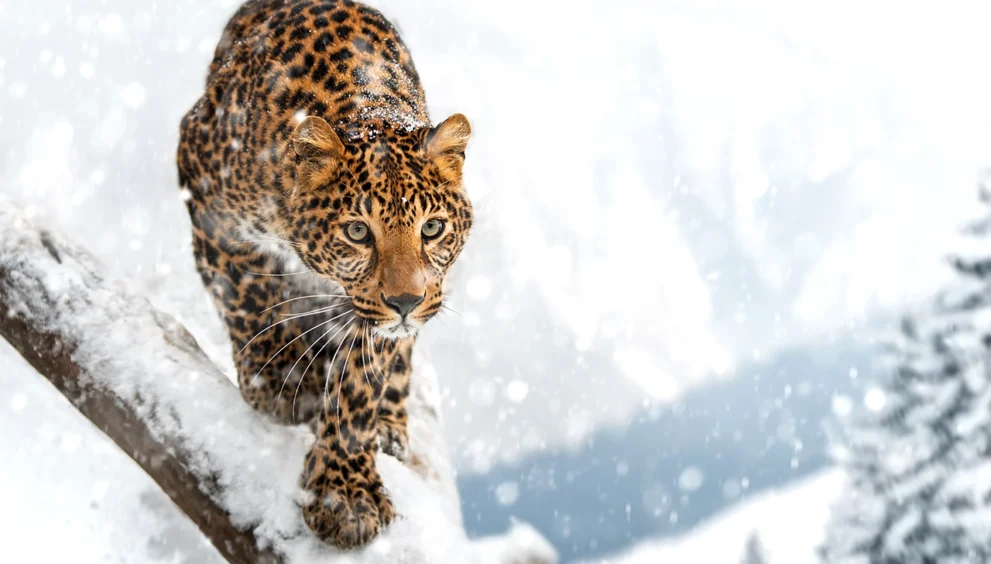
The Amur leopard is one of the rarest big cats on Earth and stands dangerously close to extinction. Found primarily in a small region of the Russian Far East and parts of northeastern China, this elusive predator survives in one of the harshest environments inhabited by any leopard species. With fewer individuals remaining in the wild than almost any other large mammal, the Amur leopard represents both the fragility of nature and the urgency of conservation.
Once roaming across vast forests and mountain ranges, the Amur leopard’s population has been pushed to the brink by human activity. Its story is not just about a single species but about the wider impact of habitat destruction, climate change, and human-wildlife conflict on Earth’s ecosystems.
Where the Amur Leopard Lives
The Amur leopard inhabits temperate forests characterized by cold winters, heavy snowfall, and rugged terrain. Unlike tropical leopards, this species has adapted to extreme conditions that demand strength, agility, and endurance.
These forests provide dense cover for hunting and shelter, as well as prey such as deer and smaller mammals. However, the limited size of this habitat severely restricts population growth and genetic diversity.
Adaptation to Cold Climates
The Amur leopard has thick fur, long legs, and wide paws that allow it to move through snow efficiently. Its pale coat with dark rosettes provides camouflage against snowy landscapes and forest shadows.
This adaptation makes the species unique among leopards, but it also means the animal cannot easily migrate to warmer regions if its habitat disappears.
Why the Amur Leopard Is Nearly Extinct
The decline of the Amur leopard did not happen naturally. It is the result of several interconnected human-driven factors.
Habitat Loss and Fragmentation
Logging, agricultural expansion, and infrastructure development have destroyed large areas of forest. Roads and settlements fragment the leopard’s territory, making it difficult to hunt, find mates, and avoid humans.
As habitats shrink, leopards are forced into smaller areas where competition and conflict increase.
Poaching and Illegal Wildlife Trade
The Amur leopard has long been targeted for its beautiful fur. Despite legal protections, poaching remains a threat due to high demand in illegal markets.
Even a small number of poaching incidents can have devastating effects on such a small population.
Decline of Prey Species
Overhunting of deer and other prey reduces food availability for leopards. When prey becomes scarce, leopards are more likely to approach human settlements, increasing the risk of retaliation.
Behaviour and Daily Life
Despite its rarity, the Amur leopard is a powerful and skilled predator.
Solitary and Elusive Nature
Amur leopards are solitary animals that require large territories to survive. They avoid humans and are rarely seen, which makes monitoring their population extremely challenging.
Most information about their behaviour comes from camera traps and tracking studies.
Hunting and Survival
These leopards rely on stealth and speed, often stalking prey for long distances before attacking. Their success depends on intact forests and healthy prey populations.
Their role as top predators helps regulate ecosystem balance by controlling herbivore numbers.
Why the Amur Leopard Matters
The loss of the Amur leopard would have consequences far beyond the disappearance of a single species.
Indicator of Ecosystem Health
As an apex predator, the Amur leopard reflects the overall health of its environment. A decline in its population signals deeper ecological problems affecting forests, prey species, and biodiversity.
Protecting the leopard also protects countless other species sharing the same habitat.
Genetic and Evolutionary Value
The Amur leopard carries unique genetic traits shaped by thousands of years of evolution in cold climates. Losing the species would mean losing this genetic heritage forever.
Conservation Efforts to Save the Amur Leopard
Despite its critical status, the Amur leopard is not without hope.
Protected Areas and Reserves
Dedicated conservation zones have been established to protect remaining leopard habitats. These areas limit logging, hunting, and human activity.
Cross-border cooperation between countries has improved habitat connectivity and monitoring.
Anti-Poaching Measures
Increased patrols, surveillance, and law enforcement efforts have reduced poaching incidents in key regions. Technology such as camera traps and satellite tracking plays a vital role in monitoring populations.
Community Involvement
Local communities are encouraged to participate in conservation through education, sustainable livelihoods, and conflict-reduction programs. When communities benefit from conservation, long-term protection becomes more achievable.
Captive Breeding and Genetic Management
Zoos and wildlife centres play an important role in preserving the Amur leopard’s genetic diversity.
Breeding Programs
Carefully managed breeding programs aim to maintain genetic health and potentially support future reintroduction efforts.
These programs act as a safeguard against total extinction in the wild.
Scientific Research
Ongoing research helps scientists understand leopard behaviour, genetics, and habitat needs. This knowledge guides effective conservation strategies.
The Role of Climate Change
Climate change introduces new challenges for the Amur leopard’s survival.
Changing Forest Conditions
Shifts in temperature and precipitation can alter forest composition, affecting prey availability and shelter.
Extreme weather events increase stress on already fragile populations.
Limited Adaptation Options
Because the Amur leopard is adapted to a specific environment, rapid climate shifts leave little room for adaptation or migration.
What Would Happen If the Amur Leopard Disappeared?
The extinction of the Amur leopard would disrupt the delicate balance of its ecosystem.
Ecological Imbalance
Without top predators, prey populations could grow unchecked, leading to overgrazing and forest degradation.
This imbalance would affect plant life, soil health, and other animal species.
Loss of Natural Heritage
Extinction is permanent. Once the Amur leopard disappears, no future conservation effort can bring it back.
How Humans Can Help Prevent Extinction
Saving the Amur leopard requires global awareness and action.
Supporting Conservation Organisations
Financial and educational support helps fund research, habitat protection, and anti-poaching efforts.
Promoting Responsible Consumption
Reducing demand for illegal wildlife products helps weaken the markets that drive poaching.
Raising Awareness
Sharing knowledge about endangered species builds public support for conservation policies and ethical practices.
A Symbol of Hope and Responsibility
The Amur leopard’s survival depends on choices made today. Its story shows how quickly human activity can push a species toward extinction, but also how focused conservation can slow or reverse that decline.
Protecting this animal is not only about saving a beautiful predator but about preserving the balance of nature and the integrity of Earth’s ecosystems.
Conclusion: Time Is Running Out
The Amur leopard stands at a critical crossroads between survival and extinction. With its population still dangerously low, continued conservation efforts are essential.
This species reminds us that extinction is not an abstract concept but a real and irreversible loss. Saving the Amur leopard means acting before it becomes another name on the list of animals humanity failed to protect.
References
https://www.worldwildlife.org/species/amur-leopard
https://www.iucnredlist.org/species/15954/5065699
https://www.nationalgeographic.com/animals/mammals/facts/amur-leopard
https://www.britannica.com/animal/Amur-leopard
https://www.panthera.org/cat/amur-leopard