

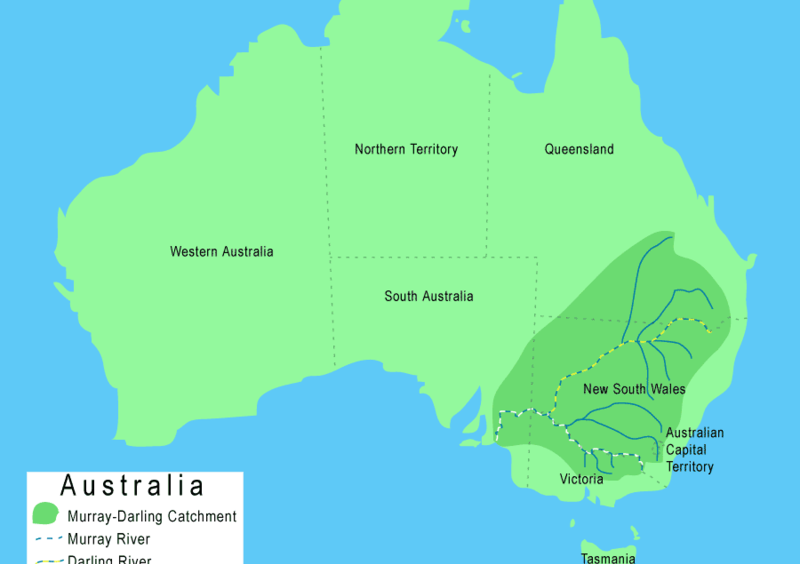
The Murray–Darling Basin is Australia’s largest and most important river system, stretching across four states and supporting millions of people, farms, wetlands, and wildlife habitats. For generations, it has been the backbone of Australia’s agricultural production and a lifeline for ecosystems across inland regions. Today, however, the basin faces a severe environmental crisis driven by overuse, climate change, and mismanagement.
Preserving the Murray–Darling Basin is not simply about water allocation. It is about protecting ecosystems, sustaining communities, and ensuring that one of Australia’s most vital natural systems can survive into the future.
Where the Murray–Darling Basin Is Located
The Murray–Darling Basin covers more than one million square kilometres across New South Wales, Victoria, Queensland, South Australia, and the Australian Capital Territory. It includes the Murray River, the Darling River, and numerous tributaries that connect wetlands, floodplains, and ecosystems.
This vast network supports diverse landscapes ranging from alpine regions to dry plains, making it one of the most ecologically complex systems in the country.
A Lifeline Across Dry Land
In a continent known for drought, the Murray–Darling Basin provides water to some of Australia’s driest regions. Its rivers and wetlands allow agriculture, wildlife, and human settlements to exist where rainfall alone would not be enough.
Why the Basin Is Under Threat
The Murray–Darling Basin’s crisis is the result of long-term pressures rather than a single event.
Over-Extraction of Water
Large volumes of water are diverted from rivers for irrigation, particularly for water-intensive crops. Excessive extraction reduces river flows, dries wetlands, and disrupts natural flooding cycles essential for ecosystem health.
When rivers no longer flood naturally, native plants and animals struggle to survive.
Climate Change and Drought
Rising temperatures and reduced rainfall have increased the frequency and severity of droughts. Less water enters the system, while evaporation increases, further reducing available flows.
Climate change intensifies existing pressures, making recovery increasingly difficult.
Impact on Wildlife and Ecosystems
The degradation of the basin has severe ecological consequences.
Wetland Collapse
Wetlands within the basin depend on periodic flooding. When water levels drop, wetlands dry out, causing vegetation loss and reducing breeding grounds for birds, fish, and amphibians.
Some wetlands have already experienced long-term damage that may take decades to reverse.
Fish Deaths and Biodiversity Loss
Low oxygen levels caused by stagnant water and heat have led to mass fish deaths in parts of the basin. Native fish populations have declined dramatically, threatening species that rely on healthy river systems.
Loss of biodiversity weakens the entire ecosystem and reduces its ability to recover.
Human and Cultural Consequences
The basin’s decline affects more than nature.
Impact on Farming Communities
Many rural communities depend on the Murray–Darling Basin for their livelihoods. Reduced water availability creates economic stress, uncertainty, and social tension.
Sustainable water management is essential to balance agricultural needs with environmental survival.
Indigenous Cultural Connections
Indigenous peoples have cared for the basin’s rivers for tens of thousands of years. Waterways hold cultural, spiritual, and historical significance.
Environmental degradation threatens these connections and undermines traditional knowledge systems.
Preservation and Recovery Efforts
Efforts to protect the Murray–Darling Basin are ongoing but complex.
Environmental Water Allocations
Water is now set aside specifically for environmental purposes, allowing rivers and wetlands to recover during critical periods.
While this approach has shown benefits, enforcement and consistency remain challenges.
Improved Water Governance
Reforms aim to limit over-extraction and improve transparency. Monitoring systems track water use and river health, though compliance varies across regions.
Why Preserving the Basin Matters
The Murray–Darling Basin is a national asset.
Ecological Stability
Healthy rivers regulate temperature, support biodiversity, and maintain soil fertility across vast areas.
Long-Term Water Security
Preserving the basin ensures water availability for future generations in an increasingly dry climate.
Conclusion: A Choice Between Collapse and Care
The Murray–Darling Basin stands at a crossroads. Continued mismanagement could push this vital system beyond recovery, while strong preservation efforts offer hope.
Protecting the basin requires cooperation between governments, communities, and industries. Its survival will shape Australia’s environmental and economic future for generations to come.
References
https://www.mdba.gov.au
https://www.environment.gov.au/water/water-for-the-environment
https://www.australiangeographic.com.au/topics/environment/2019/03/murray-darling-basin-explained/
https://www.iucn.org/resources/issues-brief/water
https://www.britannica.com/place/Murray-Darling-Basin
Image: Murray–Darling Basin Map
Source: Wikimedia Commons
Author: WateryIan
Licence: Creative Commons Attribution-ShareAlike 4.0 International (CC BY-SA 4.0)
Licence Link:https://creativecommons.org/licenses/by-sa/4.0/
Source Link:https://commons.wikimedia.org/wiki/File:Murray-Darling_Basin_Map.png