

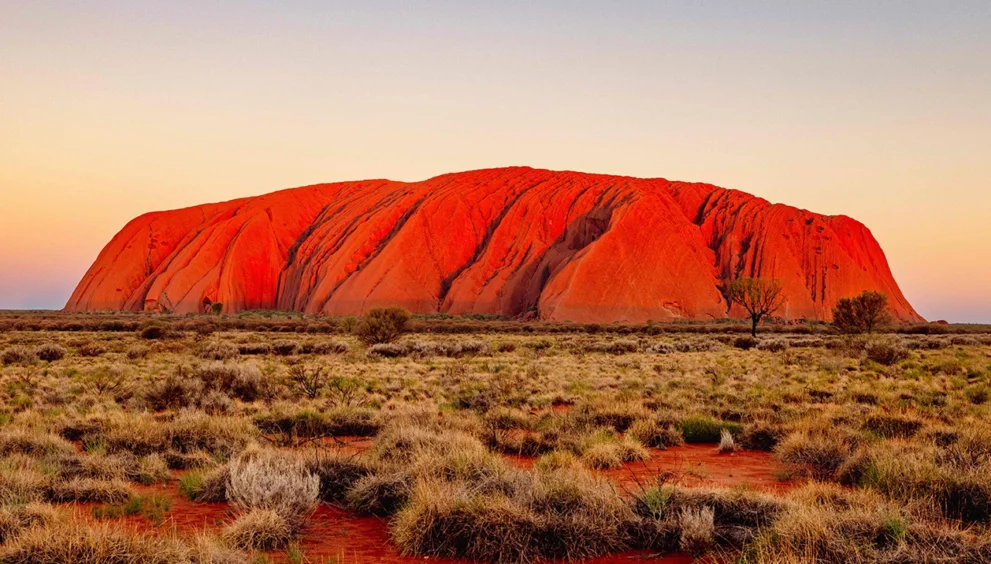
Uluru, also known as Ayers Rock, rises dramatically from the flat desert plains of Central Australia, standing as one of the most recognisable natural landmarks in the world. This immense sandstone monolith is not only visually striking but deeply significant, both geologically and culturally. Located within Uluru–Kata Tjuta National Park in the Northern Territory, Uluru represents the ancient heart of Australia’s landscape, shaped by time, weather, and spiritual tradition.
Unlike mountains formed by tectonic uplift, Uluru is the exposed tip of a massive underground rock formation. Its presence dominates the surrounding desert, creating a sense of scale and isolation that leaves a lasting impression on every visitor. This guide explores Uluru as a natural destination, explaining its formation, environment, cultural importance, and how to experience it respectfully.
Where Uluru Is Located
Uluru sits in the arid centre of Australia, approximately 450 kilometres south-west of Alice Springs. The surrounding region is characterised by vast desert plains, sparse vegetation, and extreme temperature changes.
Despite the harsh environment, Uluru has supported life for tens of thousands of years. The monolith lies within a protected national park that preserves both natural ecosystems and Indigenous cultural heritage.
The Surrounding Landscape
The land around Uluru is part of a semi-arid desert ecosystem. Spinifex grasslands, desert oaks, and low shrubs dominate the terrain. Seasonal rains briefly transform the landscape, bringing wildflowers and temporary waterholes.
This environment may appear empty at first glance, but it supports a complex network of plant and animal life adapted to survive extreme conditions.
How Uluru Was Formed
Uluru’s formation dates back hundreds of millions of years, long before humans arrived in Australia.
Geological Origins
Uluru is composed primarily of arkose sandstone, formed from ancient mountain ranges that eroded over time. Sediments accumulated, hardened, and were later tilted and exposed through geological processes.
Over millions of years, wind, rain, and temperature changes sculpted Uluru’s smooth surfaces, caves, and ridges.
Changing Colours
One of Uluru’s most remarkable features is its colour variation. At sunrise and sunset, the rock shifts from deep red to orange, purple, and gold. These changes are caused by iron oxidation in the rock interacting with sunlight.
Each moment of the day presents a different visual experience, making Uluru feel alive and constantly changing.
Cultural Significance of Uluru
Uluru is far more than a geological formation. It is a sacred site for the Anangu people, the traditional custodians of the land.
Ancient Stories and Traditions
The Anangu have lived in the Uluru region for over 60,000 years. Uluru is central to their creation stories, known as Tjukurpa, which explain the laws, customs, and spiritual connections between people, land, and animals.
Every feature of Uluru holds meaning, with caves, cracks, and markings linked to ancestral beings and events.
Respecting Indigenous Heritage
Uluru is a place of deep spiritual importance. Certain areas are sacred and restricted, and visitors are encouraged to respect cultural guidelines. Learning about Anangu traditions enhances understanding and appreciation of the landscape.
Wildlife Around Uluru
Despite its desert setting, Uluru supports diverse wildlife adapted to extreme conditions.
Desert Mammals
Species such as the mala, euro, and dingo inhabit the area. Many are nocturnal, emerging at night to avoid heat and conserve water.
These animals play vital roles in maintaining ecological balance within the desert environment.
Reptiles and Birds
Uluru is home to a wide range of reptiles, including perenties, thorny devils, and skinks. Birds such as peregrine falcons, spinifex pigeons, and honeyeaters are commonly seen around the rock and nearby waterholes.
These species demonstrate remarkable adaptations for survival in arid conditions.
Walking and Exploring Uluru
Uluru is best experienced on foot, allowing visitors to connect with the landscape at a slower pace.
Base Walk Experience
The Uluru Base Walk is a 10.6-kilometre trail that circles the rock. It offers close views of caves, rock art, waterholes, and changing textures.
Walking the base reveals details often missed from a distance, highlighting Uluru’s complexity and scale.
Guided Cultural Walks
Anangu-guided walks provide insight into traditional knowledge, bush foods, and cultural stories. These tours deepen understanding of Uluru’s living heritage and encourage respectful exploration.
Seasonal Changes and Climate
Uluru experiences extreme seasonal variations that shape the environment.
Summer Conditions
Summer temperatures can exceed 40 degrees Celsius. During this time, wildlife activity decreases during daylight hours, and visitors must take precautions against the heat.
Winter Climate
Winters are cooler, with cold nights and mild daytime temperatures. This season offers comfortable conditions for walking and wildlife observation.
Why Uluru Matters Environmentally
Uluru represents a rare combination of natural beauty and ecological resilience.
Desert Ecosystem Balance
The surrounding desert ecosystem relies on careful balance. Plants stabilise soil, animals control insect populations, and waterholes support seasonal life cycles.
Disruption to any part of this system can have lasting effects.
Conservation and Protection
Uluru–Kata Tjuta National Park is jointly managed by Anangu traditional owners and the Australian government. This partnership ensures both environmental protection and cultural preservation.
Responsible Tourism at Uluru
Protecting Uluru depends on responsible visitor behaviour.
Respecting the Land
Visitors are encouraged not to climb Uluru, as it is a sacred site. Staying on designated paths prevents erosion and protects fragile habitats.
Minimising Environmental Impact
Reducing waste, conserving water, and respecting wildlife help preserve the landscape for future generations.
The Emotional Impact of Uluru
Many visitors describe Uluru as more than a destination.
A Place of Reflection
The silence, scale, and isolation create a powerful atmosphere. Uluru encourages reflection, humility, and connection to the natural world.
A Timeless Presence
Uluru has witnessed millions of years of change. Standing before it offers a rare sense of continuity between past, present, and future.
Lessons From Uluru
Uluru teaches important lessons about coexistence.
Respect for Nature and Culture
Protecting Uluru means respecting both the land and the people connected to it. Conservation and culture are inseparable.
Long-Term Thinking
Uluru reminds humanity to think beyond short-term gain and consider the lasting impact of our actions.
Conclusion: Australia’s Living Natural Icon
Uluru stands as a powerful symbol of Australia’s natural and cultural heritage. Its ancient rock formations, vibrant colours, and spiritual significance make it one of the most important natural places on Earth.
Visiting Uluru is not simply about seeing a landmark. It is about understanding the relationship between land, people, and time. By approaching Uluru with respect and awareness, visitors help ensure that this extraordinary place remains protected, honoured, and alive for generations to come.
References
https://parksaustralia.gov.au/uluru
https://whc.unesco.org/en/list/447/
https://www.australiangeographic.com.au/topics/history-culture/2014/02/uluru-facts/
https://www.britannica.com/place/Uluru-Ayers-Rock
https://www.environment.gov.au/heritage/places/world/uluru