
Plitvice Lakes National Park is one of Europe’s most extraordinary natural landscapes, located in central Croatia between the Adriatic coast and the country’s mountainous interior. Known for its cascading lakes, turquoise waters, and dense forests, this park feels less like a destination and more like a living artwork shaped by water, rock, and time. Visitors often describe Plitvice as unreal, not because it is untouched, but because it constantly changes, forming new waterfalls and reshaping its terrain every year.
Unlike many scenic locations that rely on dramatic peaks or vast open spaces, Plitvice’s beauty lies in movement. Water flows endlessly through a chain of lakes connected by natural barriers, creating a rhythm that defines the entire ecosystem. This guide explores Plitvice Lakes as a destination, explaining what makes it unique, how to experience it properly, and why it remains one of the most important protected natural sites in the world.
Where Plitvice Lakes are located
Plitvice Lakes National Park sits in a mountainous karst region of Croatia, covering nearly 300 square kilometres of forest, lakes, and limestone formations. Its inland position creates a unique climate that supports both alpine and Mediterranean species.
The park is divided into two main sections: the Upper Lakes and the Lower Lakes. Each area has its own character, scenery, and geological history, offering visitors a layered experience rather than a single viewpoint.
The Upper Lakes
The Upper Lakes are larger, calmer, and surrounded by thick forest. Their waters appear in shades of emerald and turquoise, changing colour depending on sunlight and mineral content. These lakes are known for wide cascades and gentle flows that feel peaceful and immersive.
The Lower Lakes
The Lower Lakes are narrower and more dramatic, carved into steep limestone canyons. Here, waterfalls plunge into deep pools, creating a sense of vertical movement and echoing sound that contrasts sharply with the calmness above.
Why Plitvice Lakes Is Unique
Plitvice Lakes is not static. It is one of the few places on Earth where the landscape actively builds itself.
Natural Dam Formation
The lakes are separated by natural barriers formed from a substance called travertine. This material is created when minerals from water settle and harden over time. Moss, algae, and bacteria play a crucial role in this process, meaning the ecosystem itself shapes the terrain.
As water flows, new barriers form while older ones erode, continuously changing the arrangement of lakes and waterfalls.
Constantly Changing Water Colours
One of the most captivating aspects of Plitvice is the colour of the water. It can appear blue, green, turquoise, or grey depending on mineral levels, sunlight, microorganisms, and water flow. No two visits look exactly the same, even on the same trail.
Walking the Park Like a Tour Guide
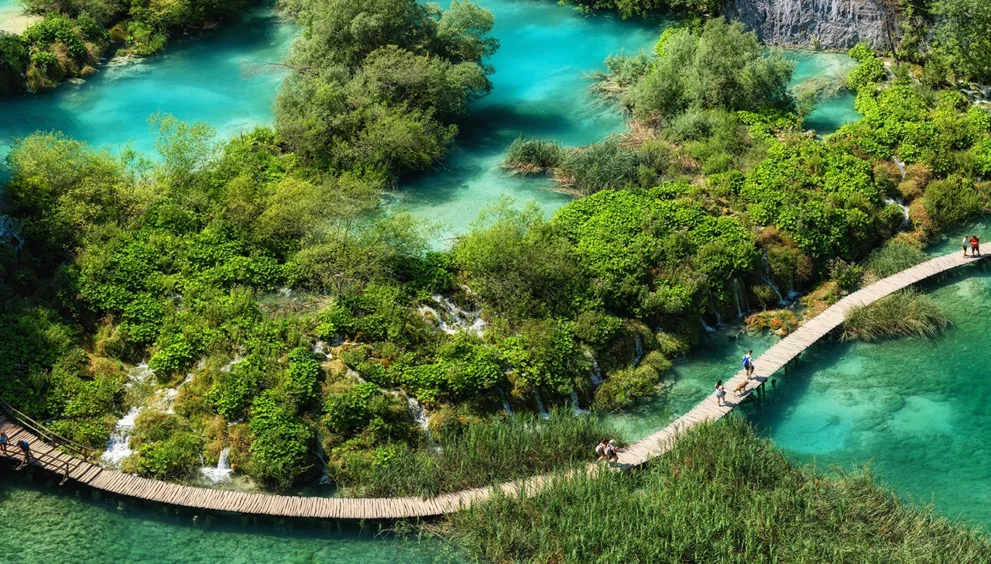
Plitvice is designed for exploration on foot through a network of wooden boardwalks and marked paths. These routes allow visitors to move safely through fragile ecosystems without disturbing them.
Boardwalk Trails
The wooden walkways float just above the water, bringing visitors incredibly close to waterfalls, fish, and aquatic plants. This design creates an immersive experience while protecting the lakebeds from erosion.
Viewpoints and Lookouts
Higher trails lead to panoramic viewpoints overlooking entire lake systems. These spots provide perspective on how water connects the park from top to bottom, revealing the full scale of its natural design.
Seasonal Changes at Plitvice Lakes
Plitvice transforms dramatically throughout the year, making each season a distinct experience.
Spring and Early Summer
Snowmelt increases water flow, creating powerful waterfalls and rapid currents. Vegetation is lush, and wildlife activity increases, making this an ideal time for nature photography.
Autumn Colors
In autumn, forests surrounding the lakes turn shades of red, orange, and gold. The contrast between colourful foliage and blue-green water creates one of the most visually striking periods of the year.
Winter Ice Landscapes
During winter, parts of the park freeze, forming icy waterfalls and snow-covered trails. While some areas are closed for safety, winter reveals a quieter, more mysterious side of Plitvice.
Wildlife and Natural Life
Plitvice Lakes is home to a wide variety of species, many of which rely on the park’s untouched environment.
Forest Animals
The surrounding forests support deer, wolves, bears, and wild boar. These animals are rarely seen but play a crucial role in maintaining ecological balance.
Bird and Aquatic Life
Bird species thrive near lakes and wetlands, while fish and amphibians inhabit the clear waters. The health of these populations reflects the purity of the ecosystem.
Rules That Protect the Park
Plitvice’s beauty survives because of strict protection rules that limit human impact.
No Swimming or Fishing
Although the water looks inviting, swimming is prohibited to protect delicate ecosystems and prevent pollution. Even small disturbances can affect travertine formation.
Staying on Marked Paths
Leaving designated trails damages vegetation and accelerates erosion. Boardwalks exist to protect both visitors and nature.
Limiting Visitor Numbers
To reduce overcrowding, entry is regulated during peak seasons. This ensures a better experience while preserving the environment.
Photography and Observation Tips
Plitvice is a dream location for photographers and nature lovers.
Best Lighting Conditions
Morning and late afternoon light enhance water colour and reduce glare. Overcast days soften reflections and reveal detail in waterfalls.
Quiet Observation
Pausing quietly allows visitors to hear water movement, birds, and forest sounds. These moments often define the most memorable experiences.
Why Plitvice Lakes Matter Globally
Plitvice Lakes is more than a tourist destination. It is a living laboratory that demonstrates how ecosystems can sustain themselves when protected.
A Model for Conservation
The park shows how natural processes can thrive without interference. It serves as an example for wetland and freshwater conservation worldwide.
A Reminder of Nature’s Fragility
The delicate balance that creates Plitvice’s beauty can be easily disrupted. Its protection highlights the importance of preserving natural systems before they are permanently altered.
Planning a Responsible Visit
Approaching Plitvice as a guided journey rather than a checklist destination enhances both enjoyment and respect.
Slow Exploration
Rushing through misses the subtle details that define the park. Slower movement allows deeper appreciation of sound, light, and texture.
Respecting the Environment
Every visitor plays a role in preserving Plitvice by following rules, minimising waste, and supporting conservation efforts.
Conclusion: A Living Landscape Worth Protecting
Plitvice Lakes National Park is a rare example of nature actively shaping itself in front of human eyes. Its flowing water, evolving terrain, and interconnected ecosystems offer more than visual beauty—they tell a story of balance, time, and resilience.
Visiting Plitvice is not just about seeing waterfalls or lakes. It is about understanding how nature works when allowed to follow its own rhythm. By treating this landscape with care and respect, visitors help ensure that Plitvice remains a living wonder for generations to come.
References
https://whc.unesco.org/en/list/98/
https://np-plitvicka-jezera.hr/en/
https://www.nationalgeographic.com/travel/article/plitvice-lakes-croatia
https://www.britannica.com/place/Plitvice-Lakes-National-Park
https://www.iucn.org/resources/world-heritage-sites/plitvice-lakes